

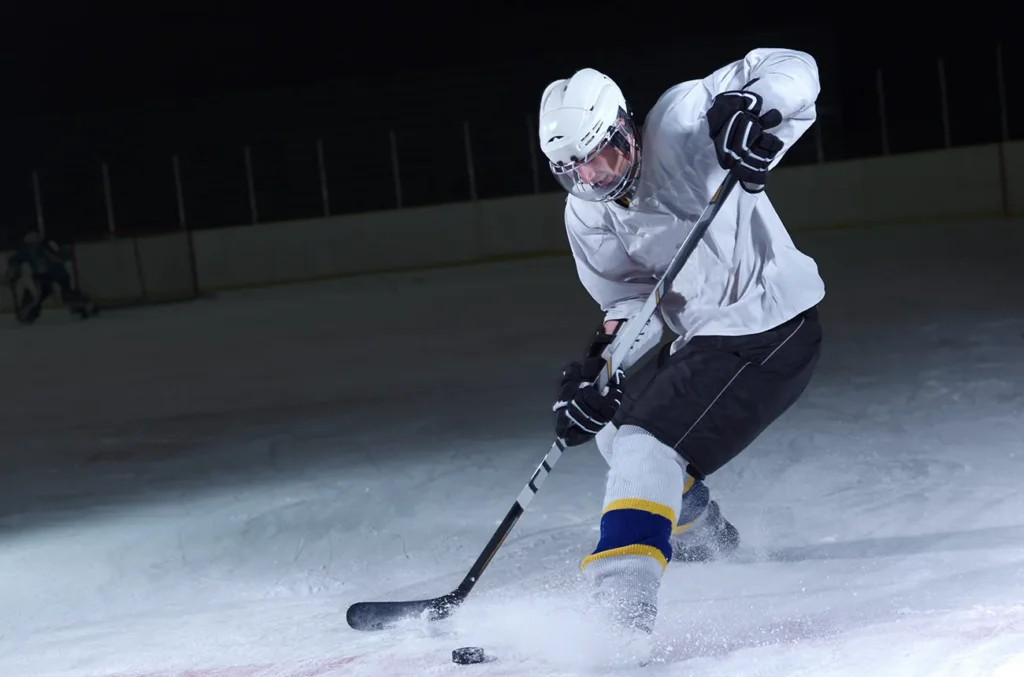
The new season has started. Hopefully you had a great offseason, and the first few games of your new season are off to a great start! First impressions have been made, and everyone is seemingly settling in for the grind of another hockey season. It is at this point where many players start to feel like the die has been cast, and players start to feel like their mobility within a lineup, on a team, or the scouting community is getting more limited by the day.
Here are a few things you can do to continue to improve your situation, advance your career, and ultimately put yourself in a better position, even as the season moves into its more monotonous phase.
1. Engage the Coaching Staff
Irrespective of whether you are a first line player, a “power-play guy/girl,” or the 13th forward on the roster, now is a good time to increase and improve your communication with the staff. They are probably at the point where they are looking to make their first tweaks of the season, and finding time to have a conversation with them about how you can help the team further is likely to put you top of mind when they are doling out new assignments.
Players are often keen to engage with coaching staffs before the season, but then once the season starts those visits and engagements typically fall off. Showing some initiative after that initial wave has passed can be something that will set you apart.
2. Make Sure you Continue to Put In The Individual Work
I’ve seen so many players put in a huge effort through the summer—train hard, eat right, take care of their sleep—only to let that all go by the wayside once the season starts.
Have a look at your schedule. Find strategic breaks and gaps in the schedule where you can get those additional weight room/strength sessions in. Find mornings where it is convenient for you to hop on the ice by yourself and work on individual skills. Most elite level players are going to have something scheduled on-ice at least five or six days a week with their teams. However, a huge percentage of that time on-ice with the full team is going to be eaten up by a combination of systems & install (powerplay, penalty kill, 5 on 5 situational/structure/framework instruction) or game situation work (battle drills, rush attack/defending, coverage). You won’t get a significant amount of time to work on the individual aspects of your own game. So, getting those individual sessions in requires some planning and foresight.
Find the windows in your schedule. Don’t let those opportunities pass you by.
3. Try to Engage with as Many of Your Teammates as You Can
Now that we are a couple of weeks into the season, there is likely to be a wide range of emotions going through the locker room.
Some players will be energized by a hot start to the season.
Others will be down, feeling like they put in a long summer of hard work for nothing.
Both groups of players will welcome off-ice engagement from their teammates. Hockey is the best sport on the planet, and this is in large part due to it being the best TEAM that wins most of the time, not the best group of individual players. One of the biggest contributors to that concept of “team” is the camaraderie amongst the players on a team. This is the perfect time of year to really start cementing that.
Those players who got off to a good start will appreciate having someone to share in their success with.
Those players who had a tough couple of weeks will appreciate a pick-me-up, and will likely value their frustrations being heard.
Seek out these opportunities, and use them to further engrain yourself in the team.
4. Diet and Sleep
Similar to Point #2 above, don’t let your diet and sleep suffer either.
There are elements in-season that are obviously out of your control. There are still lots of long bus trips in a lot of leagues where getting good sleep is tough, and there are plenty of teams still ordering a stack of pizzas after games for said bus trips, but don’t compound challenging circumstances with additional poor decisions on your own accord. (And remember, abs are made in the kitchen, not in the weight room—although a solid, consistent in-season weight room routine is a big part of the individual work cited in Point #2 above.)
Hydration is another seemingly minor factor that makes a massive difference. It improves your energy, recovery and sleep. After late-night games or practices, make sure to get some electrolytes in your system as well. Again, they help with all of the factors mentioned above.
5. WATCH VIDEO!
You and your team finally have some games on tape. Get ahead of other players and find out what’s working and what’s not, both for yourself and the team as a whole. Players constantly underestimate and underappreciate how much they can improve their game just by seeing on film the mistakes that they are making, as well as the things that worked.
If you play in any kind of junior, college or pro league, you should be able to get film on your opponents as well. You’d be amazed how much you can learn when it comes to tendencies, preferences, systems and patterns by watching other teams play. This will allow you to be proactive rather than reactive on the ice. We hear all the time about guys who can “play fast,” have good “game speed,” have a “high hockey IQ,” or who “think the game really well.” The clearest path to becoming one of those players is to get in front of the screen and watch tape.
There is absolutely a strategy, or at the very least an art, to watching video. If you have a good head coach or assistant who can help you learn how to watch video, that’s great! If not, feel free to reach out to SkateGuard—we can certainly walk you through some of the basics of getting the most out of your video sessions.
Hopefully by now, we have convinced you that even though the season has started and some players may be vocalizing or emoting that the die has already been cast, there are a LOT of things you can to do help yourself, continue to improve your standing on your own team, within the scouting community, and amongst your peers on other teams and in other leagues as the season goes along. If you have thoughts, questions or inquiries about anything that we’ve talked about here, don’t be afraid to reach out to us here at SkateGuard. We are always happy to discuss!
